RIEL BEND
At a frozen river gold claim, a miner's false vouch for a dead man's brother turns winter work into a test of loyalty and greed.
Chapter 1
The wagon hit a frozen rut and lurched hard enough to throw the mules sideways in their traces. The chains snapped taut. One of the animals blew steam through its nose and dug back in. Harlan Coyle kept his hands on the plank seat and let the jolt travel through his shoulders. The iron strap at the wagon's edge had a skin of frost on it. Bare fingers would have stuck.
The road had narrowed since dawn. Snow lay in the trees on both sides, not deep yet on the ground but waiting overhead in the black spruce boughs, loaded there for the first hard wind. The grade steepened as they climbed. Each turn gave them less of the valley behind and more of the mountain ahead. The air had thinned enough that drawing a full breath took thought.
Behind Harlan, in the wagon bed among flour sacks, lamp oil crates, a bundled coil of fuse, and two nailed boxes stenciled DYNAMITE, Ray Ellison sat with his back against the sideboard and his face turned uphill. He had not said much since Garfield. He watched the road the way a man watches a card table after the money is gone and the hand is still being played.
The wagon driver clicked at the mules and spat over the wheel. “Another mile,” he said. “Maybe two.”
Harlan nodded. He had made this climb before. In summer the road was dust and switchbacks and loose rock under the wheels. In late October it had a different sound. The ruts were frozen hard. The wagon creaked in the cold where dry timber would have flexed in warmer weather. The steel tire on the left rear wheel gave off a small high ring each time it struck stone.
He looked once over his shoulder.
Ray looked back at him. Young face. Thomas’s face in the jaw if you knew where to look, not in the eyes. Thomas had carried his watchfulness lower, deeper. Ray’s sat close to the surface. Harlan turned back to the road.
The mountain did not care who rode up it. It took the mules’ breath at the same rate it took theirs.
They came around the last turn near midday and the Coronado showed itself in parts. First the headframe, rising out of the trees like a timber gallows, cables black with grease, pulley wheels crusted white at the rims. Then the stamp mill, heard before seen: the slow, regular pounding of iron falling on ore, a sound with no hurry in it because it had all winter. Then the rest of the camp scattered over the flattened shoulder of the mountain—bunkhouse, cookhouse, assay office, shed, powder magazine set apart from the others, superintendent’s cabin a little uphill as if elevation could make authority real.
Smoke rose from three stovepipes and got torn flat by the wind.
Men were moving between buildings. No one waved. One man came out of the cookhouse with a tally sheet in his hand before the wagon had fully stopped. He was old and narrow in the face, apron under a wool coat, beard stained with tobacco. Pascoe, the cook. He began counting crates while the driver still had one boot on the brake.
Harlan climbed down. The cold bit through the sole leather when his weight settled on the ground. He reached up a hand to Ray, not because Ray needed it but because a man stepping down beside dynamite in a wagon bed ought to place his feet where he was told. Ray took the hand and came down.
His grip was dry. Too dry for a miner.
Pascoe called numbers off the wagon and marked them. Flour. Beans. Salt pork. Lamp oil. Powder. Caps. Coffee. No slack in his count. He checked each item against the page as if an omitted sack might still be found by diligence alone.
A man crossed from the office toward them. Tall, clean-shaven, good coat, watch chain visible under the open front. Superintendent Ault. He had the look of somebody who had come west with papers in his trunk instead of tools.
“Coyle,” he said.
“Harlan.”
“You made good time.”
“Road held.”
Ault’s eyes moved to Ray. He was measuring. Not the way a miner measured. More like a man estimating inventory.
“This him?”
Harlan felt Ray beside him, waiting without shifting. The wind carried the smell of crushed ore from the mill and woodsmoke from the cookhouse and, under both, the flat mineral damp that came up from the shaft collar.
“This is Ray Ellison,” Harlan said. “Three years at the Hecla. Worked the eight hundred. I can vouch for him.”
He said it once. Flat. No extra language around it. The kind of sentence men used when they meant to stand under it.
Ault looked at Ray again. Then at Harlan. He did not ask questions Harlan had already answered. The crew was short. Two men had gone down the mountain in September and no replacements had come up. Winter did its own hiring.
“All right,” Ault said. “Day shift. Under Dunlevy. Bunkhouse is full, so he’ll be where there’s room.” He glanced at the wagon. “Get your gear stowed. We start at six.”
Ray nodded. “Yes, sir.”
Ault’s eyes flicked at the “sir,” maybe hearing the wrong kind of deference in it, maybe hearing nothing. He turned and went back toward the office.
They carried Ray’s bedroll and canvas sack to the bunkhouse. The building was long, low, and hot at the center, cold at the walls. A cast-iron stove stood in the middle aisle with boots drying around it on a rack of bent wire. Double bunks lined both walls. Blankets, coats, dented tin cups on pegs, a few photographs pinned above the beds, one pair of snowshoes hanging from a beam. The air held old sweat, damp wool, tobacco smoke, and the fine dry grit that lived in miners’ clothes no matter how often they beat them out.
Harlan stopped at a lower bunk near the far end. “You’re here.”
Ray dropped his sack and bedroll. Harlan tossed his own gear onto the upper. Close enough to hear a man breathe. Far enough from the stove that the night cold would come through the wall planks.
A few of the crew looked over and looked away. Men were good at cataloguing new risk without seeming to.
The afternoon went to unloading, stowing, checking what had come up before the road shut. Harlan worked because work kept the body ahead of the mind. Ray stayed close and did what was handed to him. He was quick with weight. Strong enough. That was not the same thing as useful underground.
Near dusk, when the sky had gone from white to iron and the cold sharpened, Harlan saw Lew Dunlevy by the waste rock pile with two drill steels and a four-pound hammer. Dunlevy stood compact and square in his coat, notebook in one pocket, gloves tucked into his belt. He had the permanent pale skin of a man who spent more days under rock than under weather. His eyes missed little because they spent no time on what did not matter.
He crooked two fingers at Harlan and Ray.
“Let’s see what he’s got.”
Ray stepped forward. Dunlevy handed him a steel. The metal clicked lightly against Ray’s palm. Ray took it, and there it was at once—his grip too high on the shaft, fingers arranged for leverage, not control. A ranch hand’s grip. Not a drill holder’s. It would transmit the strike wrong. It would ring the bones of the hand numb inside a shift.
Harlan moved before he had decided to. He stepped in, put his own hand over Ray’s, and slid the grip lower by two inches.
“Steel runs colder up here,” he said. “Makes men reach for it wrong first day.”
It was nothing as speech. It was less than nothing. But his hands were on Ray’s hands, correcting a mistake that should not have existed in a three-year man.
Dunlevy was four feet away. He watched Harlan’s hand move. His eyes went to Ray’s fingers, then to Harlan’s scarred left hand with the two crooked fingers, then to Harlan’s face. No change in his own.
“Set the point against that face,” Dunlevy said.
Ray did. Better now. Harlan stepped back.
Dunlevy gave him the hammer. “Drive.”
Ray swung. Too hard on the first strike, all shoulder, no wrist. The steel skidded and rang off the rock. The sound hung bright in the cold air.
“Again,” Dunlevy said.
Second strike better. Third better than that. Ray learned with his body fast. Harlan had known he would. Fast was not the same as already knowing. The mountain was full of holes where men had mistaken one for the other.
After six blows Dunlevy held up a hand. “Enough.”
He took the hammer back. Not angry. Not satisfied. Just recording. He looked once more at Ray’s hands. Then at Harlan.
“Six o’clock,” he said, and walked toward the shaft house.
Ray let out a breath he had been holding.
Harlan took the steel from him. “Don’t squeeze the shaft. Let it ride your palm.”
Ray nodded.
“You swing from the elbow when you get tired, you miss. You miss down there, you break a man’s hand.”
Ray looked at the steel. “I can do it.”
Harlan slid the steel into the rack with the others. “Tomorrow you’ll need to.”
The light went out of the day fast after that. Supper in the cookhouse was salt pork, beans, bread hard enough to sound when it hit the table. Men ate with the concentration of people who worked for appetite. Talk stayed on weather, feed, a wheel bearing at the mill. No one asked Ray where he had worked before. No one needed to. Harlan had already spoken for him. That was the shape of a vouch: one man’s mouth binding two men’s bodies.
Walsh came in late from the mill and sat across from Harlan. Medium build, plain face, hands steady even tired. He nodded once at Harlan, once at Ray, and ate. No questions. Harlan had worked two operations with Walsh before this one. Enough time to know the other man’s rhythm in a drift, how he shifted before a strike, how he breathed before a lift. Not enough time to know where he was born or whether he had people waiting on him anywhere. It was enough.
After supper the men drifted back to the bunkhouse in twos and threes, stamping snow from boots, carrying the day’s heat out of the cookhouse on their clothes. Someone laughed once near the stove. Someone coughed until it turned into a wheeze and stopped. Ray laid out his blanket and folded his coat under his head. He worked with care, as if exactness in a bedroll could carry into other things.
Lights went out.
The bunkhouse settled into its night sounds. Timber ticking in the cold. Stove iron cooling. One man grinding his teeth in sleep. Another breathing through a blocked nose. From outside, when the wind dropped, the slow pound of the mill carried through the wall and then stopped. After that there was only weather and men.
Harlan lay on his back in the upper bunk and looked at the dark where the rafters should have been. Below him Ray did not sleep. The sound of it was clear once you knew it. Breathing too regular. Body held too still against the mattress straw. A man trying to pass for sleeping to himself.
Harlan put his hands on his chest. In the dark he could feel every old break and scar in them without looking. The crooked fingers on the left. The raised line across the right thumb web where a cap box had split and caught him years back. Hands that knew rock and timber and fuse and the weight of another man going limp underground.
He opened them.
Below him Ray shifted once, then went still again.
Harlan closed his hands until the knuckles hurt. Held them there. Then let them ease.
Outside, the wind moved against the north wall and snow hissed dry across the yard between the bunkhouse and the shaft house. Somewhere in the dark the road they had climbed that day still existed. Another storm or two and it would be gone until spring.
Harlan listened to Ray not sleeping and to the building full of men sealed one night closer to winter, and he lay awake with his hands on his chest waiting for morning to make the lie expensive.
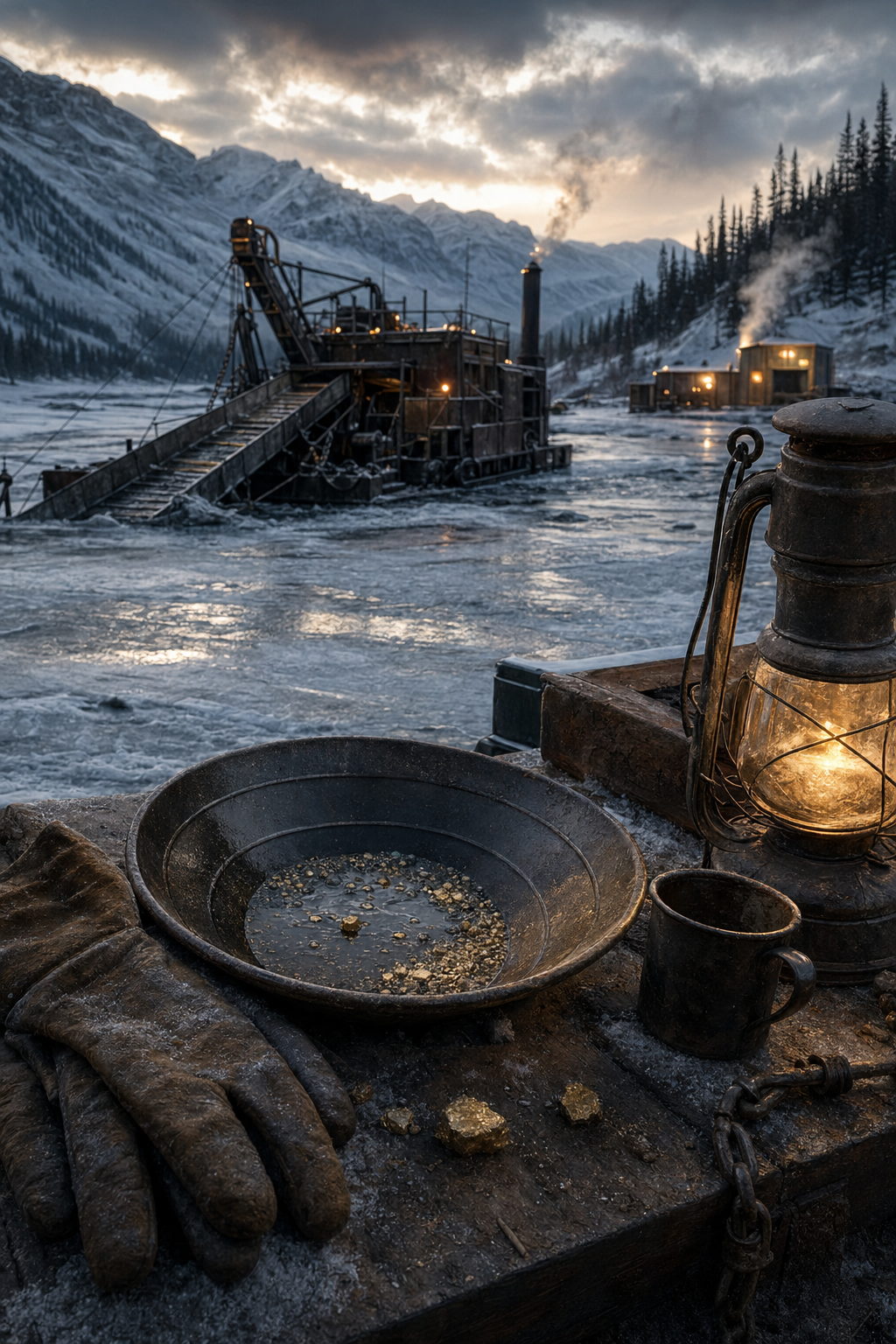
Late winter at Riel Bend, a remote placer gold claim on the Tulsquah River, men can only work the deposit while the river and roads are frozen solid. Harlan Coyle brings in Ray Ellison under false pretenses, vouching for him as an experienced hand to repay an old debt to Ray's dead brother. As the cold deepens and every flake of gold is weighed, Harlan must keep Ray alive, hide the lie from hard-eyed partners, and face what his loyalty is costing the rest of the camp.
- —Harlan Coyle — A seasoned hard-rock miner in his thirties, Harlan is lean, scarred, and quietly exact in everything he does underground. He brings Ray into camp on a lie, convinced he is paying a sacred debt, and spends the winter risking his standing and his body to make that vouch hold.
- —Ray Ellison — Young, raw, and untested, Ray arrives with quick hands, a dangerous past, and no real mining experience despite Harlan's claim. The camp sees a liability; Harlan sees the brother of a dead man and the possibility that he might yet become worth the risk.
- —Lew Dunlevy — The shift boss is a compact, disciplined veteran who trusts numbers more than sentiment and tracks every man's output like a ledger. As production slips, he becomes the sharpest pressure against Harlan's lie, arguing that an underperforming man endangers both lives and wages.
- —Thorp — An elderly miner with a limp, bad lungs, and decades of underground experience, Thorp notices almost immediately that Ray is green. Instead of exposing him, he watches, shields, and judges him by the only standard that matters in the mine: how he performs when the rock turns dangerous.
- —Walsh — Harlan's longtime work partner is steady, capable, and close to him in the wordless way only miners can be. Once he discovers the lie, he is forced into a painful middle ground between loyalty to Harlan and responsibility to the crew.
- —Victor Ault — The superintendent is educated, logistical, and nominally in charge, but he lacks the miners' instinct for stone and danger. He becomes the camp's compromised authority, trying to arbitrate between production demands and warnings he only half understands.
- —Thomas Ellison — Dead before the story begins, Thomas survives as the moral debt that governs Harlan's choices. His sacrifice in a past collapse makes Ray more than a green recruit to Harlan; it makes him an obligation Harlan cannot easily abandon.
- —The Vouch: Harlan brings Ray to the frozen claim and secures him a place with a lie about his experience. From the first shift, Ray's mistakes are visible to men who know the work, and Harlan begins quietly covering for him before suspicion hardens into judgment.
- —Under Ice: As winter seals the claim off from the outside world, Harlan trains Ray in stolen hours while the camp settles into its brutal rhythm of cold, machinery, and measured gold. A near-fatal mistake proves how dangerous the deception really is, and a few watchful men begin to understand what Harlan has done.
- —The Weight of Dust: Production slips, tempers narrow, and Dunlevy starts reducing every man's value to numbers on a page, with Ray plainly below standard. Ray improves and even shows flashes of real promise, but each gain comes with greater strain on Harlan, deeper suspicion from the crew, and fractures in his closest partnership.
- —The Crack: After injury, shortages, and rising pressure, the lie can no longer hide behind routine, and Ray is briefly pushed aside to protect the operation. But a richer section of ground pulls everyone back into the same dangerous space, where greed, weakening conditions, and opposed ideas of duty finally collide.
- —Open Hands: In the claim's last, most perilous stretch, the camp is forced to choose between what can be weighed and what has to be trusted. By the time the thaw begins and the road opens again, the winter has stripped every relationship down to what it can survive.
The prose is spare, tactile, and unsentimental, rooted in labor, weather, and the physical intelligence of men who work in lethal conditions. Cold iron, river ice, wet gravel, diesel, and the glint of assayable gold shape the sensory world. Emotion stays mostly unspoken and arrives through gesture, pressure, exhaustion, and what men choose to do when the margin disappears.